The Fundamental Choice in Industrial Sweeping
When selecting an industrial floor sweeper, the first decision is often the most critical: ride-on or walk-behind? This choice impacts cleaning efficiency, operator productivity, equipment costs, and long-term return on investment.
Cleaning Efficiency and Speed
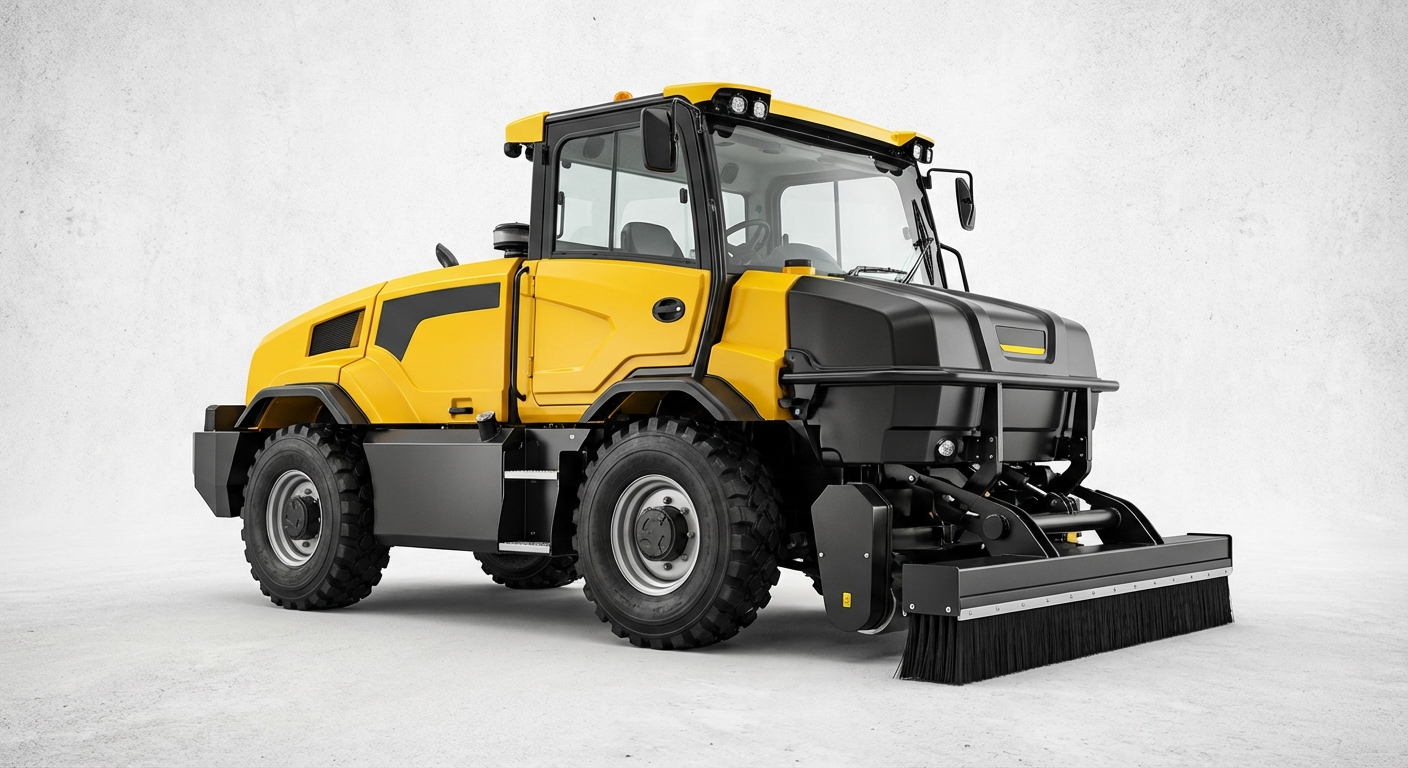
Ride-On Sweepers: Speed Demons
Ride-on sweepers are engineered for maximum coverage:
- Cleaning width: 1,000-1,500mm main brooms with side brushes extending reach to 1,800mm+
- Speed: Operating speeds of 6-8 km/h during sweeping
- Efficiency: 10,000-15,000 m² per hour
- Best for: Large open areas (warehouses, manufacturing floors, airport terminals)
Walk-Behind Sweepers: Precision Instruments
Walk-behind models trade speed for maneuverability:
- Cleaning width: 500-900mm main brooms
- Speed: Operator walking speed (3-5 km/h)
- Efficiency: 2,000-4,000 m² per hour
- Best for: Congested areas, retail stores, hospitals, parking structures
Maneuverability and Accessibility
Turning Radius
- Walk-behind: Can pivot 360° in place, ideal for aisle widths under 1.5m
- Ride-on: Turning radius of 1.5-2m requires wider aisles
Obstacle Navigation
- Walk-behind advantage: Easy to navigate around racks, pillars, and equipment
- Ride-on limitation: Requires 3+ feet clearance from obstacles
Elevator and Multi-Level Access
- Walk-behind: Can fit in standard elevators for multi-floor cleaning
- Ride-on: Typically limited to single-floor applications due to size and weight
Operator Comfort and Fatigue
Ride-On Comfort Features
- Ergonomic seat with suspension and lumbar support
- Climate-controlled cab options (heater/AC)
- Low vibration and noise levels
- Intuitive controls within easy reach
- Result: Operators can work 6-8 hours without fatigue
Walk-Behind Physical Demands
- Requires operator to walk 3-5 km per cleaning session
- Arm and shoulder fatigue from prolonged handle operation
- Exposure to ambient temperature and noise
- Result: Operator fatigue sets in after 3-4 hours, requiring breaks
Cost Comparison
Initial Purchase Price
- Walk-behind: $3,000-$8,000
- Ride-on: $12,000-$30,000
Operating Costs (Annual, based on 5,000 hours operation)
- Walk-behind: $5,000 (labor dominates)
- Ride-on: $8,000 (amortized purchase + maintenance)
Total Cost of Ownership (5 Years)
- Walk-behind: $40,000-$50,000 (purchase + labor + maintenance)
- Ride-on: $60,000-$75,000 (purchase + lower labor + maintenance)
Debris Capacity
Hopper Size
- Walk-behind: 30-60 liters (requires frequent emptying)
- Ride-on: 150-250 liters (can operate 2-3 hours between emptying)
Impact on Productivity
For facilities generating high debris volumes (manufacturing, construction sites, recycling centers), ride-on sweepers' larger hoppers significantly reduce downtime for emptying.
Power Systems
Battery Electric
- Walk-behind: 24V-36V systems, 3-6 hour runtime
- Ride-on: 48V-72V systems, 4-8 hour runtime
- Advantages: Zero emissions, quiet operation, low operating costs
- Best for: Indoor use, facilities with air quality requirements
Liquid Propane (LP)
- Typical for ride-on models only
- Continuous operation with tank swap (no charging downtime)
- Best for: Multi-shift operations, outdoor applications
Facility Size Decision Matrix
| Facility Size | Recommended Sweeper Type | Reasoning |
|---|---|---|
| Under 5,000 m² | Walk-behind | Lower cost, sufficient efficiency |
| 5,000-15,000 m² | Walk-behind or small ride-on | Depends on layout and budget |
| 15,000-30,000 m² | Ride-on | Cleaning efficiency justifies investment |
| Over 30,000 m² | Multiple ride-ons or large ride-on | Maximize productivity with largest models |
Hybrid Approaches
Many facilities benefit from a mixed fleet:
- Main cleaning: Ride-on sweeper for open areas
- Detail work: Walk-behind for aisles, corners, and tight spaces
This approach optimizes both efficiency and precision while managing capital equipment costs.
Decision Framework
Ask yourself these questions:
- What is your total floor area? (Over 15,000 m² favors ride-on)
- How congested is your floor plan? (Many obstacles favor walk-behind)
- What is your debris volume? (High debris favors ride-on hopper capacity)
- What is your budget? (Walk-behinds cost 60-75% less upfront)
- Do you clean multiple floors? (Walk-behinds are more versatile)
- How many shifts do you run? (Multi-shift favors ride-on efficiency)
Conclusion
There is no universally "better" option—only the option that best matches your specific facility's needs. RonlonClean offers both ride-on and walk-behind sweepers, and our experts can help you analyze your requirements and select the optimal equipment configuration.